---
title: TrainACE - IT and Cybersecurity Training Blog (27)
description: (27)
---
- Call: (301) 220 2802
- Email: info@trainace.com
[](http://www.trainace.com)
- [Home](https://www.trainace.com/)
- [About Us](https://www.trainace.com/pages/about-trainace-the-academy-of-computer-education)
- [Contact Us](https://www.trainace.com/pages/request-more-information)
- [Blog](https://blog.trainace.com)
[](http://www.trainace.com)
close
# TrainACE - IT and Cybersecurity Training Blog
## [The Role the Cloud Plays in the New Microsoft MCSE Curriculum](https://blog.trainace.com/the-role-the-cloud-plays-in-the-new-microsoft-mcse-curriculum)
[](https://blog.trainace.com/how-honey-pots-and-honeyfarming-is-used-in-cyber-security)
## [How Honey Pots and Honey Farming is Used in Cyber Security](https://blog.trainace.com/how-honey-pots-and-honeyfarming-is-used-in-cyber-security)
## [All About the CCNA Certification Exam](https://blog.trainace.com/all-about-the-ccna-certification-exam)
[](https://blog.trainace.com/the-cyber-security-battlefield-grows-more-dangerous)
## [The Cyber Security Battlefield Grows More Dangerous](https://blog.trainace.com/the-cyber-security-battlefield-grows-more-dangerous)
## [Free CCNA Subnetting Videos Now Available for Download](https://blog.trainace.com/free-ccna-subnetting-videos-now-available-for-download)
## [What is Advanced Persistent Threat](https://blog.trainace.com/what-is-advanced-persistent-threat)
## [What is Malware Analysis?](https://blog.trainace.com/what-is-malware-analysis)
## [Online Learning - A Fast Growing Force in Education](https://blog.trainace.com/online-learning-a-fast-growing-force-in-education)
## [CompTIA SecurityX Formerly CASP+: Who It Is For](https://blog.trainace.com/about-the-comptia-casp-certification-and-who-it-is-best-fit-for)
[](https://blog.trainace.com/the-average-salary-of-a-computer-forensics-career-and-the-ec-council-chfi-certification)
## [The Average Computer Forensics Salary](https://blog.trainace.com/the-average-salary-of-a-computer-forensics-career-and-the-ec-council-chfi-certification)
[/Unsplash/TrainACE%20Blog%20-%20CISSP%20Average%20Salaries.jpeg)](https://blog.trainace.com/average-salary-for-the-cissp-certification-by-state)
## [The Average Salary for the CISSP Certification in DC, Maryland, and Virginia](https://blog.trainace.com/average-salary-for-the-cissp-certification-by-state)
[](https://blog.trainace.com/computer-networks)
## [\[Infographic\] Computer Networks - How They Work](https://blog.trainace.com/computer-networks)
- [1](https://blog.trainace.com/page/1)
...- [26](https://blog.trainace.com/page/26)
- [27](https://blog.trainace.com/page/27)
- [28](https://blog.trainace.com/page/28)
## [The Role the Cloud Plays in the New Microsoft MCSE Curriculum](https://blog.trainace.com/the-role-the-cloud-plays-in-the-new-microsoft-mcse-curriculum)
\[fa icon="calendar'\] Feb 4, 2013, 10:56:35 AM / by [Ryan Corey](https://blog.trainace.com/author/ryan) posted in [Cloud Computing](https://blog.trainace.com/topic/cloud-computing), [MCSE](https://blog.trainace.com/topic/mcse), [Microsoft](https://blog.trainace.com/topic/microsoft), [Networking](https://blog.trainace.com/topic/networking), [Online Training](https://blog.trainace.com/topic/online-training), [Systems Administration](https://blog.trainace.com/topic/systems-administration)
[\[fa icon="comment"\] 0 Comments](https://blog.trainace.com/the-role-the-cloud-plays-in-the-new-microsoft-mcse-curriculum#comments-listing)
Microsoft has retooled its MCSE certification for IT professionals to include a major focus on the cloud. The company made the changes in response to the growing movement of IT resources to cloud-based solutions. According to Microsoft-sponsored research, cloud computing may create 14 million jobs and generate 1.1 trillion in revenue by 2015. The new MCSE certificate holder is expected to have more comprehensive knowledge of both on-premises and cloud resource technologies.
[Read More \[fa icon="long-arrow-right"\]](https://blog.trainace.com/the-role-the-cloud-plays-in-the-new-microsoft-mcse-curriculum)
[](https://blog.trainace.com/how-honey-pots-and-honeyfarming-is-used-in-cyber-security)
## [How Honey Pots and Honey Farming is Used in Cyber Security](https://blog.trainace.com/how-honey-pots-and-honeyfarming-is-used-in-cyber-security)
\[fa icon="calendar'\] Jan 29, 2013, 3:45:21 AM / by [Ryan Corey](https://blog.trainace.com/author/ryan) posted in [advanced persistent threat](https://blog.trainace.com/topic/advanced-persistent-threat), [Cisco](https://blog.trainace.com/topic/cisco), [Cybersecurity](https://blog.trainace.com/topic/cybersecurity), [Exploits](https://blog.trainace.com/topic/exploits), [Information Assurance](https://blog.trainace.com/topic/information-assurance)
[\[fa icon="comment"\] 0 Comments](https://blog.trainace.com/how-honey-pots-and-honeyfarming-is-used-in-cyber-security#comments-listing)
The term “honeypot” or, as it sometimes appears, “honey pot,” came to computer security from the world of espionage, where it referred to an agent who would be sexually available to a target. If all went as planned, the target would be compromised, either by sexual blackmail or because the relationship led the target to share secret information.
[Read More \[fa icon="long-arrow-right"\]](https://blog.trainace.com/how-honey-pots-and-honeyfarming-is-used-in-cyber-security)
## [All About the CCNA Certification Exam](https://blog.trainace.com/all-about-the-ccna-certification-exam)
\[fa icon="calendar'\] Jan 23, 2013, 4:16:42 AM / by [Ryan Corey](https://blog.trainace.com/author/ryan) posted in [CCNA](https://blog.trainace.com/topic/ccna), [Exams](https://blog.trainace.com/topic/exams), [Cisco](https://blog.trainace.com/topic/cisco), [Networking](https://blog.trainace.com/topic/networking)
[\[fa icon="comment"\] 0 Comments](https://blog.trainace.com/all-about-the-ccna-certification-exam#comments-listing)
There is no doubt that the [CCNA certification](https://www.trainace.com/products/ccna-routing-switching-training-and-certification) exam is considered one of the most daunting exams in the networking certification field. This exam has more first time failures than almost any other. In this post we explore some things that can help you prepare yourself better before sitting in front of that Pearson VUE testing station for the CCNA exam.
[Read More \[fa icon="long-arrow-right"\]](https://blog.trainace.com/all-about-the-ccna-certification-exam)
[](https://blog.trainace.com/the-cyber-security-battlefield-grows-more-dangerous)
## [The Cyber Security Battlefield Grows More Dangerous](https://blog.trainace.com/the-cyber-security-battlefield-grows-more-dangerous)
\[fa icon="calendar'\] Jan 14, 2013, 10:42:28 AM / by [Ryan Corey](https://blog.trainace.com/author/ryan) posted in [advanced persistent threat](https://blog.trainace.com/topic/advanced-persistent-threat), [Cisco](https://blog.trainace.com/topic/cisco), [cyber war](https://blog.trainace.com/topic/cyber-war), [Cybersecurity](https://blog.trainace.com/topic/cybersecurity), [Information Assurance](https://blog.trainace.com/topic/information-assurance), [Pentesting](https://blog.trainace.com/topic/pentesting), [Ethical Hacking](https://blog.trainace.com/topic/ethical-hacking)
[\[fa icon="comment"\] 0 Comments](https://blog.trainace.com/the-cyber-security-battlefield-grows-more-dangerous#comments-listing)
A huge portion of modern society uses some form of digital technology on a daily basis. Many conveniences on a national and personal level have been made possible due to this technology, but also opens up a Pandora's box of a whole new set of problems as well. The cyber battlefield grows more dangerous as organized hackers and other cyber threatening criminals set out to exploit the conveniences produced by the digital age for their own gain. There is an ongoing challenge, therefore, creating cyber security or defenses to protect the country from attacks; but have, on many occasions, been successfully breached to raise considerable concern even among the most savvy cyber security agencies in the world.
[Read More \[fa icon="long-arrow-right"\]](https://blog.trainace.com/the-cyber-security-battlefield-grows-more-dangerous)
## [Free CCNA Subnetting Videos Now Available for Download](https://blog.trainace.com/free-ccna-subnetting-videos-now-available-for-download)
\[fa icon="calendar'\] Jan 3, 2013, 9:56:23 AM / by [Ryan Corey](https://blog.trainace.com/author/ryan) posted in [Uncategorized](https://blog.trainace.com/topic/uncategorized)
[\[fa icon="comment"\] 0 Comments](https://blog.trainace.com/free-ccna-subnetting-videos-now-available-for-download#comments-listing)
A necessary step in becoming a successful Network professional is tackling the Cisco Certified Network Associate exam. After administering CCNA training courses for many years to hundreds of students, TrainACE’s lead instructor, James Younger, has found that a big trip up for many is understanding the topic of subnetting. James has created a tutorial introducing viewers to the basics of subnetting. Having a strong foundation in this skill will not only set you up to pass the CCNA certification exam, but also for a long, successful networking career. Once you have completed this “Introduction to Subnetting” video, you can further your knowledge by downloading another free, more [Advanced Subnetting Video](https://www4.gotomeeting.com/register/674229727). These easy to follow videos will help explain subnetting in terms that will make sense to viewers.
[Read More \[fa icon="long-arrow-right"\]](https://blog.trainace.com/free-ccna-subnetting-videos-now-available-for-download)
## [What is Advanced Persistent Threat](https://blog.trainace.com/what-is-advanced-persistent-threat)
\[fa icon="calendar'\] Dec 11, 2012, 11:25:45 AM / by [Ryan Corey](https://blog.trainace.com/author/ryan) posted in [advanced persistent threat](https://blog.trainace.com/topic/advanced-persistent-threat), [CEH](https://blog.trainace.com/topic/ceh), [Cisco](https://blog.trainace.com/topic/cisco), [cyber war](https://blog.trainace.com/topic/cyber-war), [Cybersecurity](https://blog.trainace.com/topic/cybersecurity), [Information Assurance](https://blog.trainace.com/topic/information-assurance), [Pentesting](https://blog.trainace.com/topic/pentesting), [Ethical Hacking](https://blog.trainace.com/topic/ethical-hacking)
[\[fa icon="comment"\] 0 Comments](https://blog.trainace.com/what-is-advanced-persistent-threat#comments-listing)
The term advanced persistent threat (APT) was originally used to describe complex, ongoing espionage perpetrated by foreign governments. However, today, APT typically refers to a category of cybercrime directed toward businesses or government entities. APTs are usually online attacks used to achieve goals beyond those that can be met by a single security breach, but some may involve malicious activity conducted onsite. Compromised computer systems are continuously monitored by the attackers or added to a stable of slave computers to be used to achieve some future goal. APTs are most often perpetrated by employing some form of malware, and IT technicians defend against APTs by installing antimalware software and hardware firewalls.
[Read More \[fa icon="long-arrow-right"\]](https://blog.trainace.com/what-is-advanced-persistent-threat)
## [What is Malware Analysis?](https://blog.trainace.com/what-is-malware-analysis)
\[fa icon="calendar'\] Dec 4, 2012, 9:23:03 AM / by [Paul Ricketts](https://blog.trainace.com/author/paul-ricketts) posted in [Cisco](https://blog.trainace.com/topic/cisco), [Cybersecurity](https://blog.trainace.com/topic/cybersecurity), [Information Assurance](https://blog.trainace.com/topic/information-assurance), [Malware](https://blog.trainace.com/topic/malware)
[\[fa icon="comment"\] 0 Comments](https://blog.trainace.com/what-is-malware-analysis#comments-listing)
## What Is Malware Analysis? A Complete Guide for IT Security Professionals
Malware analysis is the process of examining malicious software to understand how it behaves, how it spreads, and how to stop it. It remains one of the most valuable skills an IT security professional can develop. Nearly every major security breach traces back to some form of malicious code, whether that's a virus, worm, Trojan, or increasingly sophisticated fileless attack. Security researchers now track over 450,000 new malware and potentially unwanted application samples every single day, making the ability to quickly identify and neutralize threats more critical than ever.
[Read More \[fa icon="long-arrow-right"\]](https://blog.trainace.com/what-is-malware-analysis)
## [Online Learning - A Fast Growing Force in Education](https://blog.trainace.com/online-learning-a-fast-growing-force-in-education)
\[fa icon="calendar'\] Nov 7, 2012, 11:44:51 AM / by [Ryan Corey](https://blog.trainace.com/author/ryan) posted in [Online Training](https://blog.trainace.com/topic/online-training)
[\[fa icon="comment"\] 0 Comments](https://blog.trainace.com/online-learning-a-fast-growing-force-in-education#comments-listing)
[Read More \[fa icon="long-arrow-right"\]](https://blog.trainace.com/online-learning-a-fast-growing-force-in-education)
## [CompTIA SecurityX Formerly CASP+: Who It Is For](https://blog.trainace.com/about-the-comptia-casp-certification-and-who-it-is-best-fit-for)
\[fa icon="calendar'\] Sep 25, 2012, 7:45:31 AM / by [Paul Ricketts](https://blog.trainace.com/author/paul-ricketts) posted in [CASP+](https://blog.trainace.com/topic/casp), [Cisco](https://blog.trainace.com/topic/cisco), [CompTIA](https://blog.trainace.com/topic/comptia-2), [Cybersecurity](https://blog.trainace.com/topic/cybersecurity), [Information Assurance](https://blog.trainace.com/topic/information-assurance), [Ethical Hacking](https://blog.trainace.com/topic/ethical-hacking)
[\[fa icon="comment"\] 0 Comments](https://blog.trainace.com/about-the-comptia-casp-certification-and-who-it-is-best-fit-for#comments-listing)
CASP+ has a new name. CompTIA’s advanced cybersecurity certification is now **SecurityX**, with the current exam version **CAS-005** launched on **December 17, 2024**.
That name change is the first thing the old article needs to fix. People still search for CASP+, and many resumes still use the older name, but the certification to talk about in 2026 is CompTIA SecurityX.
The purpose has not changed much. SecurityX is still built for experienced cybersecurity professionals who want to prove they can design, implement, and defend enterprise security systems. It is more technical than a management credential, and it is not meant for beginners.
[Read More \[fa icon="long-arrow-right"\]](https://blog.trainace.com/about-the-comptia-casp-certification-and-who-it-is-best-fit-for)
[](https://blog.trainace.com/the-average-salary-of-a-computer-forensics-career-and-the-ec-council-chfi-certification)
## [The Average Computer Forensics Salary](https://blog.trainace.com/the-average-salary-of-a-computer-forensics-career-and-the-ec-council-chfi-certification)
\[fa icon="calendar'\] Aug 14, 2012, 2:04:24 PM / by [Paul Ricketts](https://blog.trainace.com/author/paul-ricketts) posted in [Salary](https://blog.trainace.com/topic/salary), [CHFI](https://blog.trainace.com/topic/chfi), [Cisco](https://blog.trainace.com/topic/cisco), [Cybersecurity](https://blog.trainace.com/topic/cybersecurity), [EC-Council](https://blog.trainace.com/topic/ec-council)
[\[fa icon="comment"\] 0 Comments](https://blog.trainace.com/the-average-salary-of-a-computer-forensics-career-and-the-ec-council-chfi-certification#comments-listing)
Computer forensics is no longer just about pulling files from a seized laptop. In 2026, digital forensics sits inside incident response, cloud investigations, mobile device analysis, malware review, insider-threat cases, fraud investigations, and legal discovery.
That is why salary data can look messy. A “computer forensics” job in a police lab may pay very differently from a digital forensics and incident response role at a defense contractor, bank, consulting firm, or managed security provider.
[Read More \[fa icon="long-arrow-right"\]](https://blog.trainace.com/the-average-salary-of-a-computer-forensics-career-and-the-ec-council-chfi-certification)
[/Unsplash/TrainACE%20Blog%20-%20CISSP%20Average%20Salaries.jpeg)](https://blog.trainace.com/average-salary-for-the-cissp-certification-by-state)
## [The Average Salary for the CISSP Certification in DC, Maryland, and Virginia](https://blog.trainace.com/average-salary-for-the-cissp-certification-by-state)
\[fa icon="calendar'\] Jul 6, 2012, 8:11:03 AM / by [Paul Ricketts](https://blog.trainace.com/author/paul-ricketts) posted in [Cisco](https://blog.trainace.com/topic/cisco), [CISSP](https://blog.trainace.com/topic/cissp), [Cybersecurity](https://blog.trainace.com/topic/cybersecurity)
[\[fa icon="comment"\] 0 Comments](https://blog.trainace.com/average-salary-for-the-cissp-certification-by-state#comments-listing)
If you are looking at the CISSP, the real salary question is not “What does the certification pay?” It is “What does the certification help me qualify for?”
That distinction matters. The Bureau of Labor Statistics does not track CISSP-specific salaries. ZipRecruiter, Glassdoor, and Payscale can be useful snapshots, but they mix job postings, self-reported pay, title inflation, remote roles, and employer salary bands. For a cleaner 2026 answer, it is better to triangulate: use BLS/O\*NET for the occupation baseline, ISC2 for CISSP-holder salary context, and CyberSeek for demand.
[Read More \[fa icon="long-arrow-right"\]](https://blog.trainace.com/average-salary-for-the-cissp-certification-by-state)
[](https://blog.trainace.com/computer-networks)
## [\[Infographic\] Computer Networks - How They Work](https://blog.trainace.com/computer-networks)
\[fa icon="calendar'\] Jun 28, 2012, 1:43:08 PM / by [Paul Ricketts](https://blog.trainace.com/author/paul-ricketts) posted in [CompTIA](https://blog.trainace.com/topic/comptia-2), [Network+](https://blog.trainace.com/topic/network)
[\[fa icon="comment"\] 0 Comments](https://blog.trainace.com/computer-networks#comments-listing)
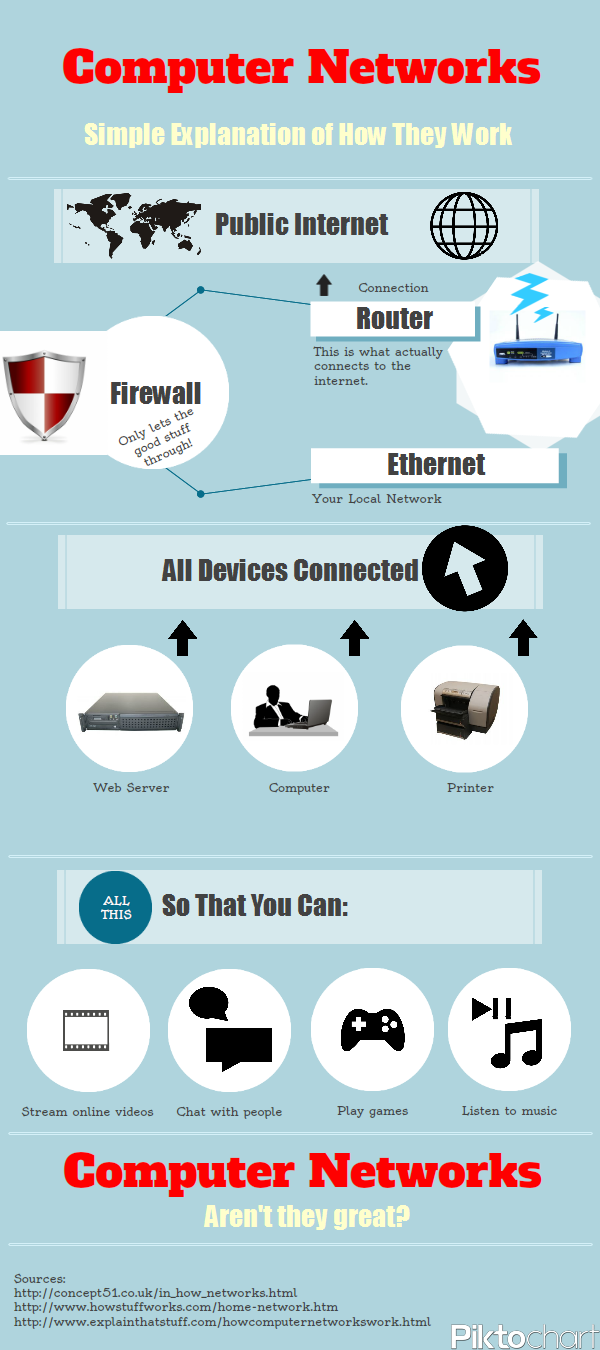
# Computer Networks Explained: How Devices Connect, Share Data, and Reach the Internet
**Last updated: 2026**
[Read More \[fa icon="long-arrow-right"\]](https://blog.trainace.com/computer-networks)
[\[fa icon="angle-double-left"\] Prev](https://blog.trainace.com/page/26) [All posts](https://blog.trainace.com/all) [Next \[fa icon="angle-double-right"\]](https://blog.trainace.com/page/28)
[](http://www.trainace.com)
IT & Cybersecurity training from beginner to advanced. Individual, Corporate and Government Group training.
- Add:
7833 Walker Drive, Greenbelt
- Call: (301) 220 2802
- Info@trainace.com
### Links
- [Home](https://www.trainace.com/)
- [About Us](https://www.trainace.com/pages/about-trainace-the-academy-of-computer-education)
- [Contact Us](https://www.trainace.com/pages/request-more-information)
- [Blog](https://blog.trainace.com)
### Services
- [Home](https://www.trainace.com/)
- [About Us](https://www.trainace.com/pages/about-trainace-the-academy-of-computer-education)
- [Contact Us](https://www.trainace.com/pages/request-more-information)
- [Blog](https://blog.trainace.com)
### Contacts
Enter your email address to register to our newsletter subscription
(c) 2024 All Rights Reserved.