---
title: TrainACE - IT and Cybersecurity Training Blog | Paul Ricketts (20)
description: Originally from the UK, Paul Ricketts is the Director of Marketing at TrainACE in Greenbelt, MD. Having started out in the field of Geographic Information Systems, Paul has a wealth of experience in a wide variety of industries, focused on tech., graphics and data analysis. Having finally settled in the field of marketing, he has spent the last 8 years fine tuning his skills in the art of communication and persuasion. (20)
---
- Call: (301) 220 2802
- Email: info@trainace.com
[](http://www.trainace.com)
- [Home](https://www.trainace.com/)
- [About Us](https://www.trainace.com/pages/about-trainace-the-academy-of-computer-education)
- [Contact Us](https://www.trainace.com/pages/request-more-information)
- [Blog](https://blog.trainace.com)
[](http://www.trainace.com)
close
# TrainACE - IT and Cybersecurity Training Blog
## [What is Malware Analysis?](https://blog.trainace.com/what-is-malware-analysis)
## [CompTIA SecurityX Formerly CASP+: Who It Is For](https://blog.trainace.com/about-the-comptia-casp-certification-and-who-it-is-best-fit-for)
[](https://blog.trainace.com/the-average-salary-of-a-computer-forensics-career-and-the-ec-council-chfi-certification)
## [The Average Computer Forensics Salary](https://blog.trainace.com/the-average-salary-of-a-computer-forensics-career-and-the-ec-council-chfi-certification)
[/Unsplash/TrainACE%20Blog%20-%20CISSP%20Average%20Salaries.jpeg)](https://blog.trainace.com/average-salary-for-the-cissp-certification-by-state)
## [The Average Salary for the CISSP Certification in DC, Maryland, and Virginia](https://blog.trainace.com/average-salary-for-the-cissp-certification-by-state)
[](https://blog.trainace.com/computer-networks)
## [\[Infographic\] Computer Networks - How They Work](https://blog.trainace.com/computer-networks)
## [Why Cloud Security Training Should be a Priority for Tech Firms in the Next Year](https://blog.trainace.com/why-cloud-security-training-should-be-a-priority-for-tech-firms-in-the-next-year)
[](https://blog.trainace.com/assessing-the-changes-to-the-new-mcse-certification)
## [MCSE Certification in 2026: What to Study Instead](https://blog.trainace.com/assessing-the-changes-to-the-new-mcse-certification)
[](https://blog.trainace.com/microsoft-certification-restructuring-bringing-back-the-mcsa-and-mcse)
## [What Replaced MCSA and MCSE? A Practical Guide to Microsoft Certifications](https://blog.trainace.com/microsoft-certification-restructuring-bringing-back-the-mcsa-and-mcse)
## [Common Information Technology Careers and How to Choose Your First Path](https://blog.trainace.com/information-technology-careers)
## [How to Make a Career Change Into IT](https://blog.trainace.com/how-to-make-a-career-change-in-to-information-technology-it)
- [1](https://blog.trainace.com/author/paul-ricketts/page/1)
...- [19](https://blog.trainace.com/author/paul-ricketts/page/19)
- [20](https://blog.trainace.com/author/paul-ricketts/page/20)
## Paul Ricketts
/TrainACE%20(in-house)/Paul%20R.-2.png?width=35&name=Paul%20R.-2.png)
Originally from the UK, Paul Ricketts is the Director of Marketing at TrainACE in Greenbelt, MD. Having started out in the field of Geographic Information Systems, Paul has a wealth of experience in a wide variety of industries, focused on tech., graphics and data analysis. Having finally settled in the field of marketing, he has spent the last 8 years fine tuning his skills in the art of communication and persuasion.
Find me on:
[\[fa icon="linkedin-square"\]Linkedin](https://www.linkedin.com/in/paularicketts/) [\[fa icon="twitter-square"\]Twitter](https://twitter.com/paulricketts)
## Recent Posts
## [What is Malware Analysis?](https://blog.trainace.com/what-is-malware-analysis)
\[fa icon="calendar'\] Dec 4, 2012, 9:23:03 AM / by [Paul Ricketts](https://blog.trainace.com/author/paul-ricketts) posted in [Cisco](https://blog.trainace.com/topic/cisco), [Cybersecurity](https://blog.trainace.com/topic/cybersecurity), [Information Assurance](https://blog.trainace.com/topic/information-assurance), [Malware](https://blog.trainace.com/topic/malware)
[\[fa icon="comment"\] 0 Comments](https://blog.trainace.com/what-is-malware-analysis#comments-listing)
## What Is Malware Analysis? A Complete Guide for IT Security Professionals
Malware analysis is the process of examining malicious software to understand how it behaves, how it spreads, and how to stop it. It remains one of the most valuable skills an IT security professional can develop. Nearly every major security breach traces back to some form of malicious code, whether that's a virus, worm, Trojan, or increasingly sophisticated fileless attack. Security researchers now track over 450,000 new malware and potentially unwanted application samples every single day, making the ability to quickly identify and neutralize threats more critical than ever.
[Read More \[fa icon="long-arrow-right"\]](https://blog.trainace.com/what-is-malware-analysis)
## [CompTIA SecurityX Formerly CASP+: Who It Is For](https://blog.trainace.com/about-the-comptia-casp-certification-and-who-it-is-best-fit-for)
\[fa icon="calendar'\] Sep 25, 2012, 7:45:31 AM / by [Paul Ricketts](https://blog.trainace.com/author/paul-ricketts) posted in [CASP+](https://blog.trainace.com/topic/casp), [Cisco](https://blog.trainace.com/topic/cisco), [CompTIA](https://blog.trainace.com/topic/comptia-2), [Cybersecurity](https://blog.trainace.com/topic/cybersecurity), [Information Assurance](https://blog.trainace.com/topic/information-assurance), [Ethical Hacking](https://blog.trainace.com/topic/ethical-hacking)
[\[fa icon="comment"\] 0 Comments](https://blog.trainace.com/about-the-comptia-casp-certification-and-who-it-is-best-fit-for#comments-listing)
CASP+ has a new name. CompTIA’s advanced cybersecurity certification is now **SecurityX**, with the current exam version **CAS-005** launched on **December 17, 2024**.
That name change is the first thing the old article needs to fix. People still search for CASP+, and many resumes still use the older name, but the certification to talk about in 2026 is CompTIA SecurityX.
The purpose has not changed much. SecurityX is still built for experienced cybersecurity professionals who want to prove they can design, implement, and defend enterprise security systems. It is more technical than a management credential, and it is not meant for beginners.
[Read More \[fa icon="long-arrow-right"\]](https://blog.trainace.com/about-the-comptia-casp-certification-and-who-it-is-best-fit-for)
[](https://blog.trainace.com/the-average-salary-of-a-computer-forensics-career-and-the-ec-council-chfi-certification)
## [The Average Computer Forensics Salary](https://blog.trainace.com/the-average-salary-of-a-computer-forensics-career-and-the-ec-council-chfi-certification)
\[fa icon="calendar'\] Aug 14, 2012, 2:04:24 PM / by [Paul Ricketts](https://blog.trainace.com/author/paul-ricketts) posted in [Salary](https://blog.trainace.com/topic/salary), [CHFI](https://blog.trainace.com/topic/chfi), [Cisco](https://blog.trainace.com/topic/cisco), [Cybersecurity](https://blog.trainace.com/topic/cybersecurity), [EC-Council](https://blog.trainace.com/topic/ec-council)
[\[fa icon="comment"\] 0 Comments](https://blog.trainace.com/the-average-salary-of-a-computer-forensics-career-and-the-ec-council-chfi-certification#comments-listing)
Computer forensics is no longer just about pulling files from a seized laptop. In 2026, digital forensics sits inside incident response, cloud investigations, mobile device analysis, malware review, insider-threat cases, fraud investigations, and legal discovery.
That is why salary data can look messy. A “computer forensics” job in a police lab may pay very differently from a digital forensics and incident response role at a defense contractor, bank, consulting firm, or managed security provider.
[Read More \[fa icon="long-arrow-right"\]](https://blog.trainace.com/the-average-salary-of-a-computer-forensics-career-and-the-ec-council-chfi-certification)
[/Unsplash/TrainACE%20Blog%20-%20CISSP%20Average%20Salaries.jpeg)](https://blog.trainace.com/average-salary-for-the-cissp-certification-by-state)
## [The Average Salary for the CISSP Certification in DC, Maryland, and Virginia](https://blog.trainace.com/average-salary-for-the-cissp-certification-by-state)
\[fa icon="calendar'\] Jul 6, 2012, 8:11:03 AM / by [Paul Ricketts](https://blog.trainace.com/author/paul-ricketts) posted in [Cisco](https://blog.trainace.com/topic/cisco), [CISSP](https://blog.trainace.com/topic/cissp), [Cybersecurity](https://blog.trainace.com/topic/cybersecurity)
[\[fa icon="comment"\] 0 Comments](https://blog.trainace.com/average-salary-for-the-cissp-certification-by-state#comments-listing)
If you are looking at the CISSP, the real salary question is not “What does the certification pay?” It is “What does the certification help me qualify for?”
That distinction matters. The Bureau of Labor Statistics does not track CISSP-specific salaries. ZipRecruiter, Glassdoor, and Payscale can be useful snapshots, but they mix job postings, self-reported pay, title inflation, remote roles, and employer salary bands. For a cleaner 2026 answer, it is better to triangulate: use BLS/O\*NET for the occupation baseline, ISC2 for CISSP-holder salary context, and CyberSeek for demand.
[Read More \[fa icon="long-arrow-right"\]](https://blog.trainace.com/average-salary-for-the-cissp-certification-by-state)
[](https://blog.trainace.com/computer-networks)
## [\[Infographic\] Computer Networks - How They Work](https://blog.trainace.com/computer-networks)
\[fa icon="calendar'\] Jun 28, 2012, 1:43:08 PM / by [Paul Ricketts](https://blog.trainace.com/author/paul-ricketts) posted in [CompTIA](https://blog.trainace.com/topic/comptia-2), [Network+](https://blog.trainace.com/topic/network)
[\[fa icon="comment"\] 0 Comments](https://blog.trainace.com/computer-networks#comments-listing)
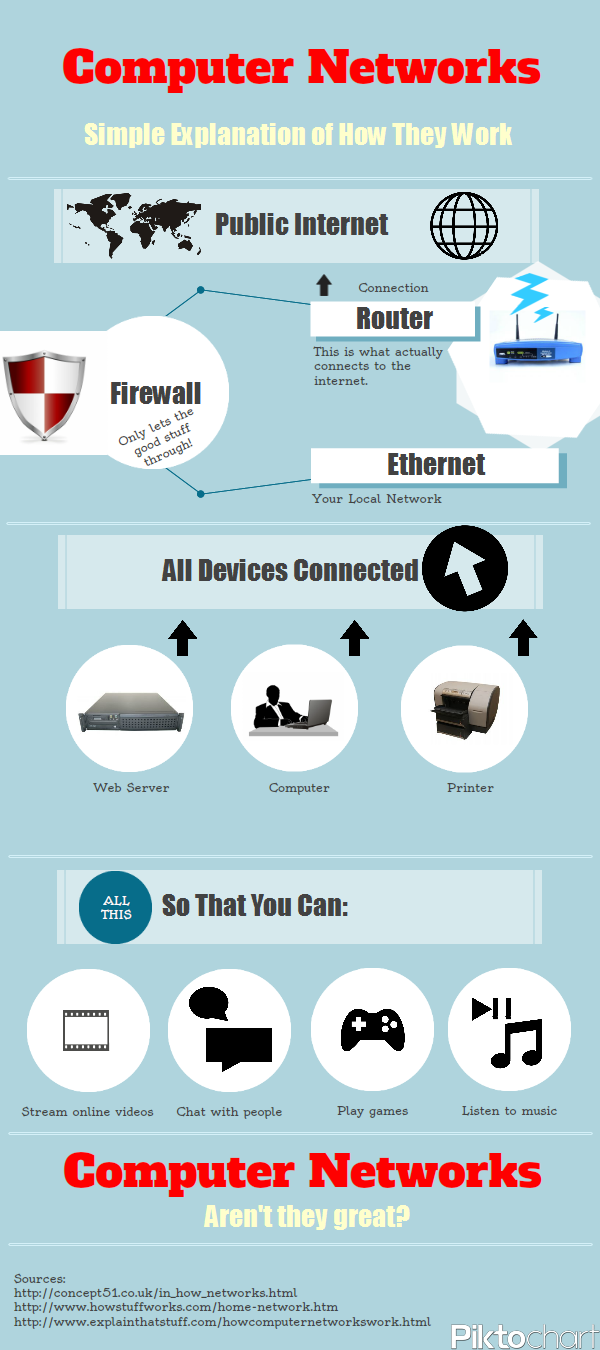
# Computer Networks Explained: How Devices Connect, Share Data, and Reach the Internet
**Last updated: 2026**
[Read More \[fa icon="long-arrow-right"\]](https://blog.trainace.com/computer-networks)
## [Why Cloud Security Training Should be a Priority for Tech Firms in the Next Year](https://blog.trainace.com/why-cloud-security-training-should-be-a-priority-for-tech-firms-in-the-next-year)
\[fa icon="calendar'\] Jun 7, 2012, 5:08:36 PM / by [Paul Ricketts](https://blog.trainace.com/author/paul-ricketts) posted in [Cloud Computing](https://blog.trainace.com/topic/cloud-computing), [Cybersecurity](https://blog.trainace.com/topic/cybersecurity)
[\[fa icon="comment"\] 0 Comments](https://blog.trainace.com/why-cloud-security-training-should-be-a-priority-for-tech-firms-in-the-next-year#comments-listing)
Cloud security training deserves a place at the top of every tech firm's agenda for one simple reason: the cloud attack surface is growing faster than the security workforce. Recent analysis puts the global cybersecurity talent shortfall at roughly 4.8 million professionals, while cloud security guidance from major vendors keeps emphasizing the same point: organizations are responsible for securing the identities, data, workloads, APIs, and configurations inside their own environments.
[Read More \[fa icon="long-arrow-right"\]](https://blog.trainace.com/why-cloud-security-training-should-be-a-priority-for-tech-firms-in-the-next-year)
[](https://blog.trainace.com/assessing-the-changes-to-the-new-mcse-certification)
## [MCSE Certification in 2026: What to Study Instead](https://blog.trainace.com/assessing-the-changes-to-the-new-mcse-certification)
\[fa icon="calendar'\] Jun 1, 2012, 10:08:31 AM / by [Paul Ricketts](https://blog.trainace.com/author/paul-ricketts) posted in [MCSA](https://blog.trainace.com/topic/mcsa), [MCSE](https://blog.trainace.com/topic/mcse), [Microsoft](https://blog.trainace.com/topic/microsoft)
[\[fa icon="comment"\] 0 Comments](https://blog.trainace.com/assessing-the-changes-to-the-new-mcse-certification#comments-listing)
## MCSE Skills Still Matter, but the Credential Path Has Moved
The MCSE name carries a lot of history for Windows Server, infrastructure, messaging, database, and cloud administrators. The exam path itself has been retired, but the underlying skills are still valuable when they are tied to modern Microsoft environments.
Administrators now need to show they can manage hybrid infrastructure, cloud resources, identity, security, automation, monitoring, and business continuity. That makes a role-based path more useful than chasing a retired credential label.
[Read More \[fa icon="long-arrow-right"\]](https://blog.trainace.com/assessing-the-changes-to-the-new-mcse-certification)
[](https://blog.trainace.com/microsoft-certification-restructuring-bringing-back-the-mcsa-and-mcse)
## [What Replaced MCSA and MCSE? A Practical Guide to Microsoft Certifications](https://blog.trainace.com/microsoft-certification-restructuring-bringing-back-the-mcsa-and-mcse)
\[fa icon="calendar'\] Apr 19, 2012, 7:23:29 AM / by [Paul Ricketts](https://blog.trainace.com/author/paul-ricketts) posted in [MCSA](https://blog.trainace.com/topic/mcsa), [MCSE](https://blog.trainace.com/topic/mcse), [Microsoft](https://blog.trainace.com/topic/microsoft), [Systems Administration](https://blog.trainace.com/topic/systems-administration), [Network Administration](https://blog.trainace.com/topic/network-administration)
[\[fa icon="comment"\] 0 Comments](https://blog.trainace.com/microsoft-certification-restructuring-bringing-back-the-mcsa-and-mcse#comments-listing)
## MCSA and MCSE Are Historical Credentials Now
MCSA and MCSE were once the familiar Microsoft certification path for administrators, engineers, and infrastructure specialists. That path is no longer available for new candidates. Microsoft moved its certification program toward role-based credentials that map to cloud, security, data, productivity, and developer responsibilities.
[Read More \[fa icon="long-arrow-right"\]](https://blog.trainace.com/microsoft-certification-restructuring-bringing-back-the-mcsa-and-mcse)
## [Common Information Technology Careers and How to Choose Your First Path](https://blog.trainace.com/information-technology-careers)
\[fa icon="calendar'\] Jan 19, 2012, 2:21:54 PM / by [Paul Ricketts](https://blog.trainace.com/author/paul-ricketts) posted in [Cybersecurity](https://blog.trainace.com/topic/cybersecurity), [Systems Administration](https://blog.trainace.com/topic/systems-administration), [Network Administration](https://blog.trainace.com/topic/network-administration)
[\[fa icon="comment"\] 0 Comments](https://blog.trainace.com/information-technology-careers#comments-listing)
## Start With the Work, Not the Job Title
The best way to choose an information technology career is to compare the work each role performs every week. Job titles vary by employer, but the day-to-day patterns are easier to recognize: support users, keep networks online, administer systems, protect data, automate repeatable tasks, and document each completed update.
[Read More \[fa icon="long-arrow-right"\]](https://blog.trainace.com/information-technology-careers)
## [How to Make a Career Change Into IT](https://blog.trainace.com/how-to-make-a-career-change-in-to-information-technology-it)
\[fa icon="calendar'\] Jan 11, 2012, 12:40:26 PM / by [Paul Ricketts](https://blog.trainace.com/author/paul-ricketts) posted in [Jobs](https://blog.trainace.com/topic/jobs), [Uncategorized](https://blog.trainace.com/topic/uncategorized), [Network+](https://blog.trainace.com/topic/network), [A+](https://blog.trainace.com/topic/a)
[\[fa icon="comment"\] 0 Comments](https://blog.trainace.com/how-to-make-a-career-change-in-to-information-technology-it#comments-listing)
Changing careers into information technology is not about memorizing every acronym before you apply for your first job. It is about proving you can solve beginner technical problems, explain what you did, and keep learning when the first answer does not work.
[Read More \[fa icon="long-arrow-right"\]](https://blog.trainace.com/how-to-make-a-career-change-in-to-information-technology-it)
[\[fa icon="angle-double-left"\] Prev](https://blog.trainace.com/author/paul-ricketts/page/19) [All posts](https://blog.trainace.com/all)
[](http://www.trainace.com)
IT & Cybersecurity training from beginner to advanced. Individual, Corporate and Government Group training.
- Add:
7833 Walker Drive, Greenbelt
- Call: (301) 220 2802
- Info@trainace.com
### Links
- [Home](https://www.trainace.com/)
- [About Us](https://www.trainace.com/pages/about-trainace-the-academy-of-computer-education)
- [Contact Us](https://www.trainace.com/pages/request-more-information)
- [Blog](https://blog.trainace.com)
### Services
- [Home](https://www.trainace.com/)
- [About Us](https://www.trainace.com/pages/about-trainace-the-academy-of-computer-education)
- [Contact Us](https://www.trainace.com/pages/request-more-information)
- [Blog](https://blog.trainace.com)
### Contacts
Enter your email address to register to our newsletter subscription
(c) 2024 All Rights Reserved.